If you are thinking about buying an investment property in Atlantic City, the numbers on a listing sheet only tell part of the story. In this market, one block can underwrite very differently from the next because flood exposure, legal rental use, and infrastructure conditions can change fast. The good news is that with the right checklist, you can spot risks early, price your offer more accurately, and avoid expensive surprises after closing. Let’s dive in.
Start With the Exact Block
Atlantic City is not one uniform investment market. The city officially identifies neighborhoods including Bungalow Park, Chelsea, Chelsea Heights, Ducktown, Inlet, Marina District, Venice Park, and Westside, which gives you a better framework for evaluating a property than relying on citywide averages alone. You can review the city’s official Atlantic City neighborhood information to understand how local areas are defined.
For investors, the first question is simple: what is happening on this specific block and in the surrounding area? Some locations may have stronger residential continuity, while others are more tied to tourism patterns or changing infrastructure conditions. That difference matters when you are estimating rent, maintenance, vacancy, and resale flexibility.
Public investment is another useful signal, even though it is not a promise of future appreciation. The city has announced resiliency and infrastructure work in areas including Chelsea, Midtown, Inlet, Ducktown, Lower Chelsea, and Gardner’s Basin, along with projects near Atlantic and Pacific Avenues. Recent updates include bulkhead, pump station, and seawall work, the Baltic Avenue Canal rebuild, and neighborhood-level priorities outlined in the State of the City release.
Verify Legal Use Before Pricing the Deal
Before you calculate returns, confirm what the property is actually allowed to be. In Atlantic City, an annual rental, a seasonal rental, and a short-term rental may have very different compliance requirements and income potential. If you skip this step, you can end up underwriting a use that is not allowed.
The city’s Landlord-Tenant Affairs office oversees rent control for most residential dwellings. Its guidance says covered units must be registered within 30 days of occupancy or purchase, and annual rent increases are tied to CPI filings unless another approved process applies. That means your long-term rental assumptions should reflect local rules, not just market rent estimates.
If you are considering a vacation or short-stay strategy, review the city’s short-term rental requirements before you write an offer. Atlantic City defines short-term or vacation rentals as residential dwelling units rented for 90 consecutive days or less, and owners or operators must obtain a seasonal certificate of occupancy after a code-compliance inspection and approved occupancy load.
Those rules also come with real costs. Under the city’s short-term rental ordinance, the annual application fee is $150, and the annual license fee depends on occupancy load:
- $1,000 for 1 to 6 occupants
- $1,500 for 7 to 11 occupants
- $1,800 for 12 to 16 occupants
If you are buying a condo, be especially careful. The same ordinance says short-term rentals are allowed in condominium units only when the condominium bylaws or master deed permit them. A unit that looks ideal for seasonal income on paper may not support that use at all.
Check Code and Compliance Risks
A good-looking property can still have legal or operational issues. Atlantic City Code Enforcement monitors conditions such as habitability, overcrowding, illegal conversions, and property maintenance concerns. For investors, that means legal unit count, approved layout, occupancy limits, and parking should all be verified before you make an offer.
Lead-based paint compliance should also be on your checklist. Atlantic City issued a 2024 notice reminding owners about the state’s lead-based paint inspection requirements. According to the notice, certain rental dwellings in New Jersey require inspection, generally with reinspection every three years or upon turnover if there is no valid lead-safe certification, though exemptions may apply, including some properties built during or after 1978 and some seasonal rentals of less than six months.
This is one of those details that can affect both your budget and your timeline. If the property needs compliance work or documentation updates, you want to know that before your offer becomes your obligation.
Treat Flood Risk as a Core Item
In Atlantic City, flood diligence is not optional. The city’s Flood Insurance Rate Map page should be checked for every address before you submit an offer. FEMA also notes that buyers should use the Map Service Center, that A and V zones are high-risk flood zones, and that standard homeowners insurance usually does not cover flood damage.
The broader risk profile is significant. Atlantic City’s Consolidated Plan states that 89% of developed areas are in a Special Flood Hazard Area, and the local hazard profile includes flood, hurricane or tropical storm, nor’easter, extreme wind, coastal erosion, and sea-level-rise risk. Those are not abstract concerns for a shore investor. They are part of the operating environment.
Long-term investors should also pay attention to coastal change over time. A 2025 Delaware River Basin Commission presentation reported that sea level at the Atlantic City tide gauge rose 1.7 inches per decade from 1912 to 2021. That does not tell you what one specific property will do, but it does support a more conservative approach to hold period, reserves, and exit planning.
Inspect for Coastal Wear
A standard walk-through is not enough for a coastal investment property. You should inspect for moisture intrusion, corrosion, and signs of prior flood damage, not just cosmetic condition. In shore markets, small maintenance problems can turn into expensive repairs faster than many buyers expect.
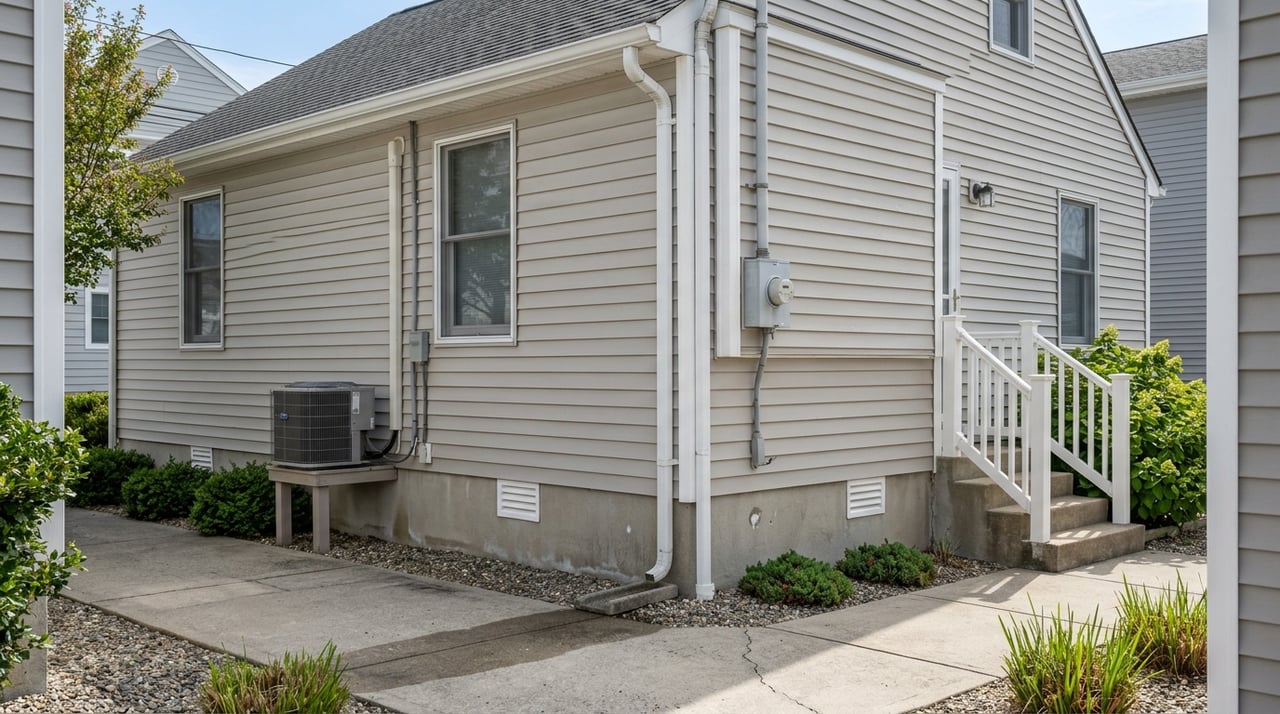
FEMA’s coastal construction guidance explains that salt spray and moisture can accelerate corrosion and decay in coastal structures. Before you offer, pay close attention to:
- Roof flashing
- Fasteners and connectors
- Windows and doors
- HVAC equipment
- Crawlspaces or basements
- Signs of chronic dampness or prior flood repairs
This type of inspection can help you decide whether the property needs a routine reserve budget or a major capital plan. That is a very important distinction when you are setting your price.
Underwrite With Property-Specific Numbers
Atlantic City averages can help you frame the market, but they should never replace property-level due diligence. According to the New Jersey Treasury’s 2025 tax tables, Atlantic City has a general tax rate of 3.380, an effective tax rate of 2.155, an average residential tax bill of $4,225, and an average sales price of $254,104.99. Those are useful reference points, but your decision should be based on the subject property’s actual tax bill and cost structure.
Your operating-cost model should include more than mortgage, taxes, and basic insurance. In Atlantic City, it is smart to budget for:
- Property taxes
- Insurance
- Flood insurance
- HOA or condo fees
- Utilities
- Repairs and capital reserves
- Property management
- Rent control compliance costs if applicable
- Lead inspection compliance if applicable
- Short-term rental application and licensing fees if applicable
A deal that looks strong on gross income can become a very different deal once local compliance and carrying costs are added in.
Use the Right Rental Comparables
Rental comps only work when they match the property’s real use case. In Atlantic City, a year-round rental is not the same as a permitted seasonal rental, and neither is the same as a condo that cannot legally host short-term stays. Similar square footage does not automatically mean similar income.
Try to compare properties by the same neighborhood, building type, legal use, and seasonality. That approach gives you a more realistic view of income potential and helps you avoid overpaying based on the wrong comparison set.
Match Management to Reality
Management deserves attention before you buy, not after. Atlantic City’s short-term rental page states that owners and tenants must comply with rules related to noise, parking, business licensing, trash, and occupancy, and it also provides a 24-hour complaint channel. That level of oversight means some properties will require either hands-on local involvement or professional management from day one.
If you do not live nearby, this issue becomes even more important. Your management plan should match the property type, rental strategy, and compliance burden so your projected returns reflect how the asset will actually operate.
Build the Exit Plan Into the Offer
Your exit strategy should be written before you commit, not invented later. A property that only works because of one narrow permitted use, one favorable condo rule, or one optimistic rent-control assumption may have a smaller resale pool in the future. Flexibility usually supports a stronger long-term position.
That does not mean every investment needs the same plan. It means you should know whether you are buying for annual income, seasonal performance, future resale, or a blend of all three. In a market as block-sensitive as Atlantic City, clarity at the start can protect you later.
Your Pre-Offer Checklist
Before you submit an offer on an Atlantic City investment property, make sure you can answer these questions clearly:
- What neighborhood and block is the property on, and what local conditions stand out?
- Are there nearby drainage, seawall, canal, roadway, or resiliency projects that could affect access or long-term hold strategy?
- Is the intended use legal as an annual rental, seasonal rental, or short-term rental?
- If it is a condo, do the master deed and bylaws allow the use you want?
- Does the property appear to have any code, parking, occupancy, or unit-count issues?
- Will lead-based paint inspection rules apply?
- What flood zone is the property in, and what does flood insurance cost?
- Is there evidence of corrosion, moisture intrusion, or prior flood-related repair?
- What are the actual taxes, fees, insurance costs, reserves, and management costs for this property?
- Does the investment still make sense if rules, repairs, or neighborhood conditions change?
The best Atlantic City investment offers are not just aggressive. They are informed. If you want help evaluating a property’s neighborhood fit, rental strategy, or management picture, connect with Eric Millstein for local guidance grounded in how shore investments actually perform.
FAQs
What should you check before offering on an Atlantic City investment property?
- Confirm legal use, review the flood map, inspect for moisture and coastal wear, verify taxes and compliance costs, and make sure your exit strategy still works if conditions change.
Do Atlantic City short-term rentals require a license?
- Yes. The city says short-term or vacation rentals of 90 consecutive days or less require a seasonal certificate of occupancy after inspection, and the ordinance also includes annual application and license fees based on occupancy load.
Are all Atlantic City condos allowed to be short-term rentals?
- No. The city’s short-term rental ordinance says condominium units can only be used for short-term rentals when the condominium bylaws or master deed permit that use.
Why is flood research important for Atlantic City investment properties?
- Atlantic City states that most developed areas are in a Special Flood Hazard Area, and flood zone, insurance cost, and long-term coastal risk can all affect cash flow, repairs, and resale.
How do rent control rules affect Atlantic City investment property analysis?
- The city’s Landlord-Tenant Affairs office says rent control applies to most residential dwellings, with registration requirements and CPI-based annual rent increase rules for covered units, so investors should account for those limits when underwriting long-term rentals.
What expenses do buyers often miss on Atlantic City investment deals?
- Commonly missed costs include flood insurance, HOA or condo fees, lead inspection compliance, short-term rental fees, property management, reserves for coastal wear, and property-specific tax differences.